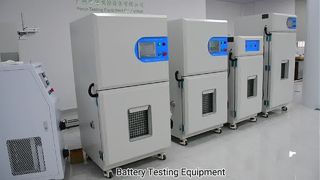
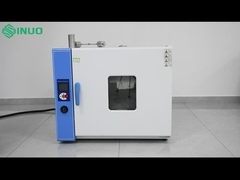
Brief: Learn how this solution can streamline typical workflows and improve reliability. In this video, we demonstrate the Battery Explosion-Proof Test Chamber, showing how it safely contains battery over-discharge and charge/discharge tests. You'll see its robust construction, safety mechanisms, and how it protects operators and equipment during critical battery safety evaluations.
Related Product Features:
Robust enclosure constructed with reinforced steel and stainless steel to contain potential explosions and fires.
Integrated ventilation and exhaust systems remove and filter hazardous gases and fumes generated during testing.
Safety features include explosion-proof door locks, pressure relief mechanisms, and emergency shutdown systems.
Double tempered glass observation windows with steel wire grid for safe visual inspection of tests.
Multi-layer design with individual test zones, each with independent lighting and exhaust control.
Designed for high load capacity, supporting up to 150kg on the bottom layer and 50kg on upper layers.
Internal surfaces laminated with Teflon tape for corrosion resistance, insulation, and easy cleaning.
Convenient wire loading ports and exhaust guides for easy integration with external test equipment.
FAQs:
What is the primary purpose of the Battery Explosion-Proof Test Chamber?
The chamber is designed to safely contain battery overcharge, over-discharge, and charge/discharge tests, protecting operators and instruments from potential explosions, fires, or hazardous gas releases during battery failure simulations.
Does the test chamber include the charge and discharge test equipment?
No, the charge and discharge test equipment is external and must be prepared by the user. The explosion-proof chamber itself is the safety enclosure where the battery is placed during testing.
What safety features are included to protect operators during testing?
Key safety features include explosion-proof door locks, pressure relief mechanisms, emergency shutdown systems, double tempered glass observation windows with steel wire grids, and a ventilation system to remove hazardous fumes.
Can the chamber's internal configuration be customized?
Yes, the standard three-zone structure can be customized to meet specific testing requirements, including size adjustments and layout modifications for different battery types and test protocols.