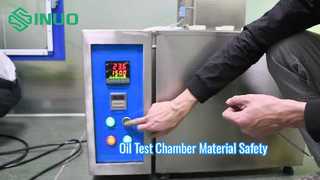
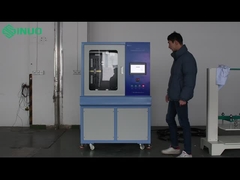
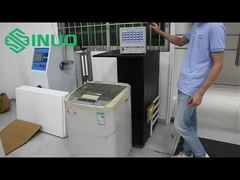
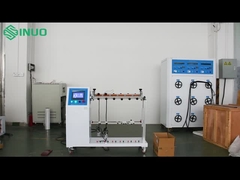
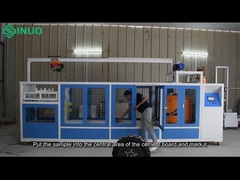
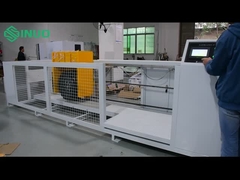
Brief: Join us for a close-up look at this solution and see it in action. This video provides a detailed walkthrough of the IEC 62368-1 Annex G.15 Vibration Test System running, showcasing its components like the ZZ-2000 vibration generator, KA-21 digital switching power amplifier, and expansion tables. You'll learn how it performs vibration tests for audio/video equipment and batteries, simulating real-world conditions to identify design defects and ensure product reliability.
Related Product Features:
The system features a ZZ-2000 vibration generator with a double magnetic circuit structure for stronger magnetic fields and reduced magnetic flux leakage.
It includes a skeletonless moving coil design for lightweight operation, high no-load acceleration, and minimal waveform distortion.
The KA-21 digital switching power amplifier uses sinusoidal frequency multiplication pulse width modulation for high signal-to-noise ratio and efficient conversion.
Equipped with TB-1010 vertical and SC-1010 horizontal expansion tables for accommodating larger test pieces with precise performance.
Supports vibration testing for various battery types including lithium-ion, nickel-metal hydride, and lead-acid for reliability assessment.
Features comprehensive protection with 18 system safeguards, including overvoltage, overheating, and overcurrent protection.
The system allows for integration with environmental test chambers to create comprehensive environmental testing setups.
Designed for Environmental Stress Screening to eliminate product defects during development and production phases.
FAQs:
What types of products can be tested with this vibration system?
The system is suitable for vibration testing of audio/video equipment and various battery types, including charging treasures, lithium-ion, nickel-metal hydride, nickel-cadmium, and lead-acid batteries, for reliability and structural assessments.
How does the system handle larger test pieces?
It includes customizable vertical (TB-1010) and horizontal (SC-1010) expansion tables that extend the testing surface while maintaining performance specifications like frequency range and acceleration.
What are the key safety features of the vibration test system?
The system offers 18 protection functions, such as power amplifier overvoltage, system timing, over-displacement, leakage, and overheating protections, ensuring reliable and safe operation during tests.